
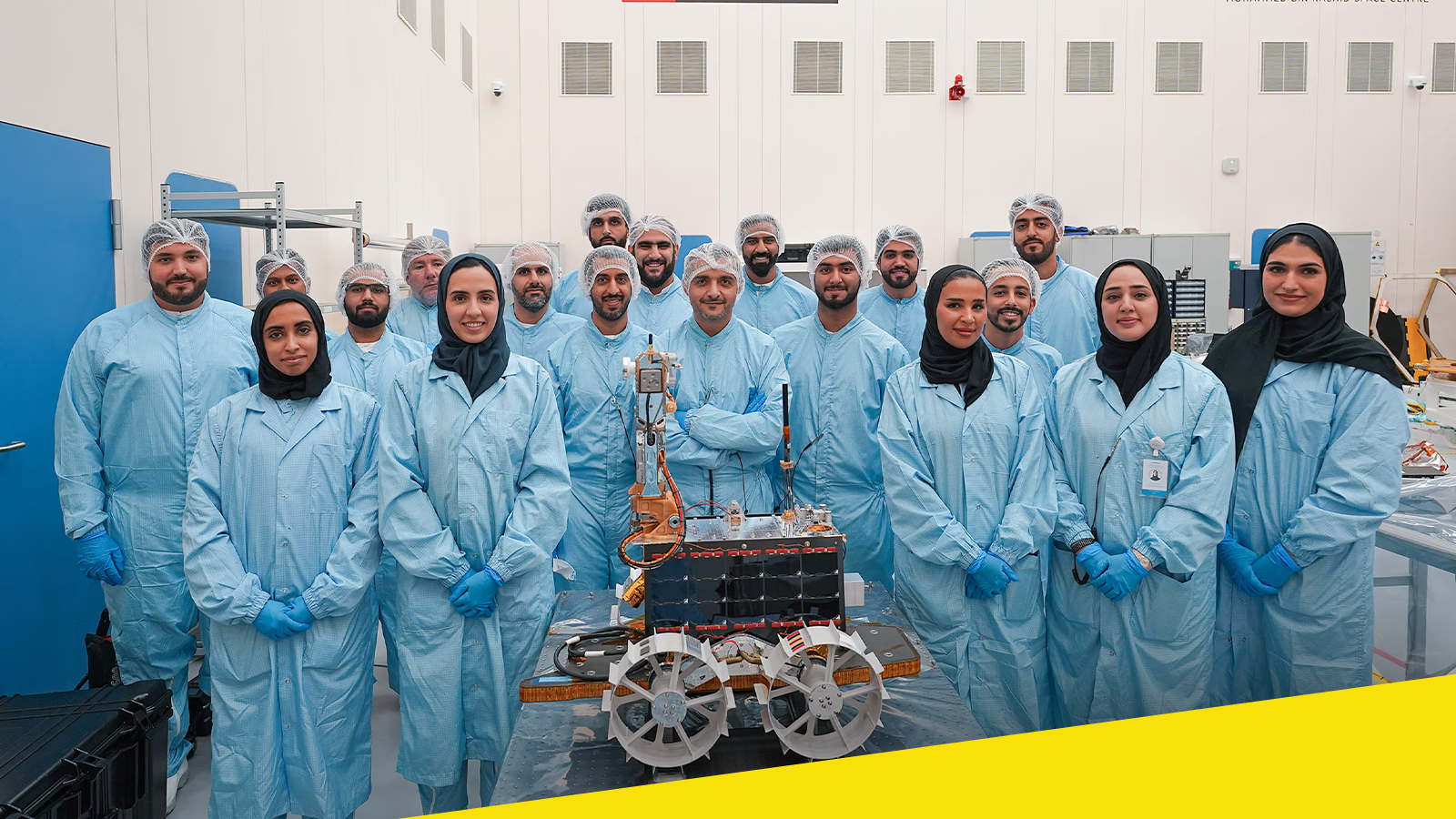
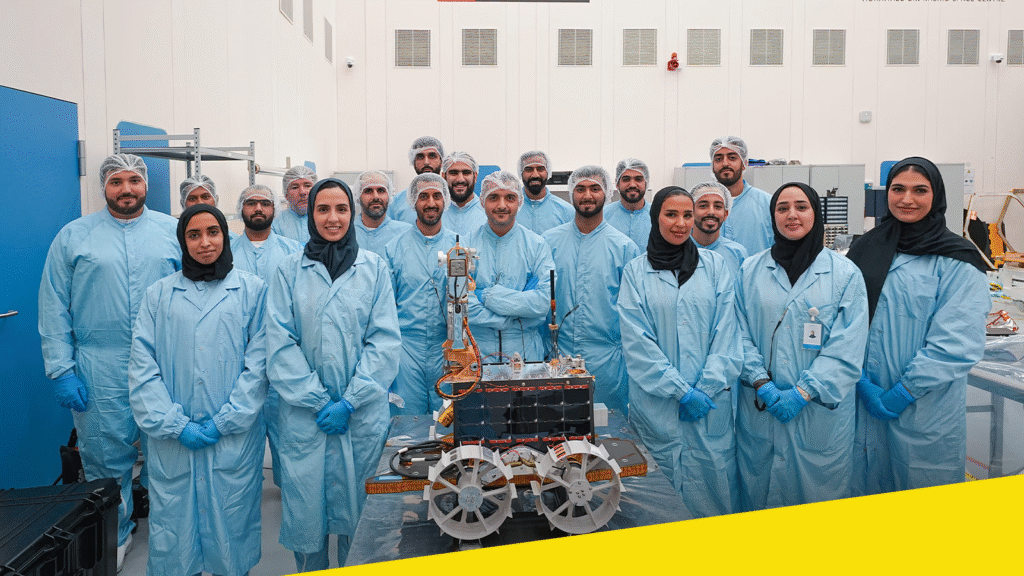
The United Arab Emirates has successfully completed the development of its Rashid Rover 2, marking another major milestone in the nation’s rapidly growing space exploration journey. Built under the Mohammed Bin Rashid Space Centre (MBRSC), the rover symbolizes the UAE’s resilience and determination to push forward after the first Rashid rover was lost during a lunar landing attempt aboard the Japanese Hakuto-R lander in 2023. Rather than slowing momentum, the setback strengthened the UAE’s resolve to refine its technology, expand its scientific capabilities, and return to the Moon with a stronger mission.
Rashid Rover 2 features significant technological upgrades inspired by lessons learned from the first mission. Engineers have enhanced its structural endurance, mobility systems, and thermal protection to cope with the extreme temperatures and rugged terrain of the Moon. The rover will be equipped with advanced navigation sensors, improved wheel designs for better surface traction, and upgraded communication systems to maintain reliable contact with mission control. Additionally, the UAE has incorporated novel scientific instruments to analyze lunar soil composition, measure temperature variation, and study electrostatic dust a key challenge for long-term lunar missions.
Ahead of the mission, the rover will undergo rigorous testing, including vibration, vacuum, and thermal endurance trials, to simulate lunar environmental conditions. These preparations are essential to ensure mission success and strengthen the UAE’s ability to participate in future deep-space ventures. Once fully qualified, Rashid Rover 2 will be integrated with a lunar lander and prepared for launch. The exact launch provider and schedule are expected to be revealed soon, aligning with global commercial lunar transport efforts.
Scientifically, the mission aims to advance knowledge that supports future human exploration and sustainable operations on the Moon. Rashid Rover 2 will capture high-resolution imagery, conduct soil analysis, and assist in understanding the Moon’s surface dynamics. Its findings are expected to contribute to international research initiatives, including NASA’s Artemis program and global partnerships aimed at establishing a future lunar economy.
Beyond its scientific scope, the mission reflects the UAE’s broader strategic ambitions. The Emirates continues to position itself as a regional leader in advanced technology, and its growing space program serves as a catalyst for innovation, STEM education, and global collaboration. Alongside lunar exploration, the UAE is investing in Mars research, satellite projects, and upcoming interplanetary missions such as the asteroid belt explorer.
By advancing Rashid Rover 2 to its final preparation phase, the UAE demonstrates not only technical progress but also a national commitment to knowledge-driven development. The mission represents resilience, scientific ambition, and a future-focused vision. As the Emirates moves closer to placing its rover on the lunar surface, the world will be watching closely. If successful, Rashid Rover 2 will mark a historic step forward for the nation positioning the UAE among a select group of countries with proven lunar exploration capabilities, and inspiring a new generation across the Arab world to pursue careers in science, engineering, and space exploration.