
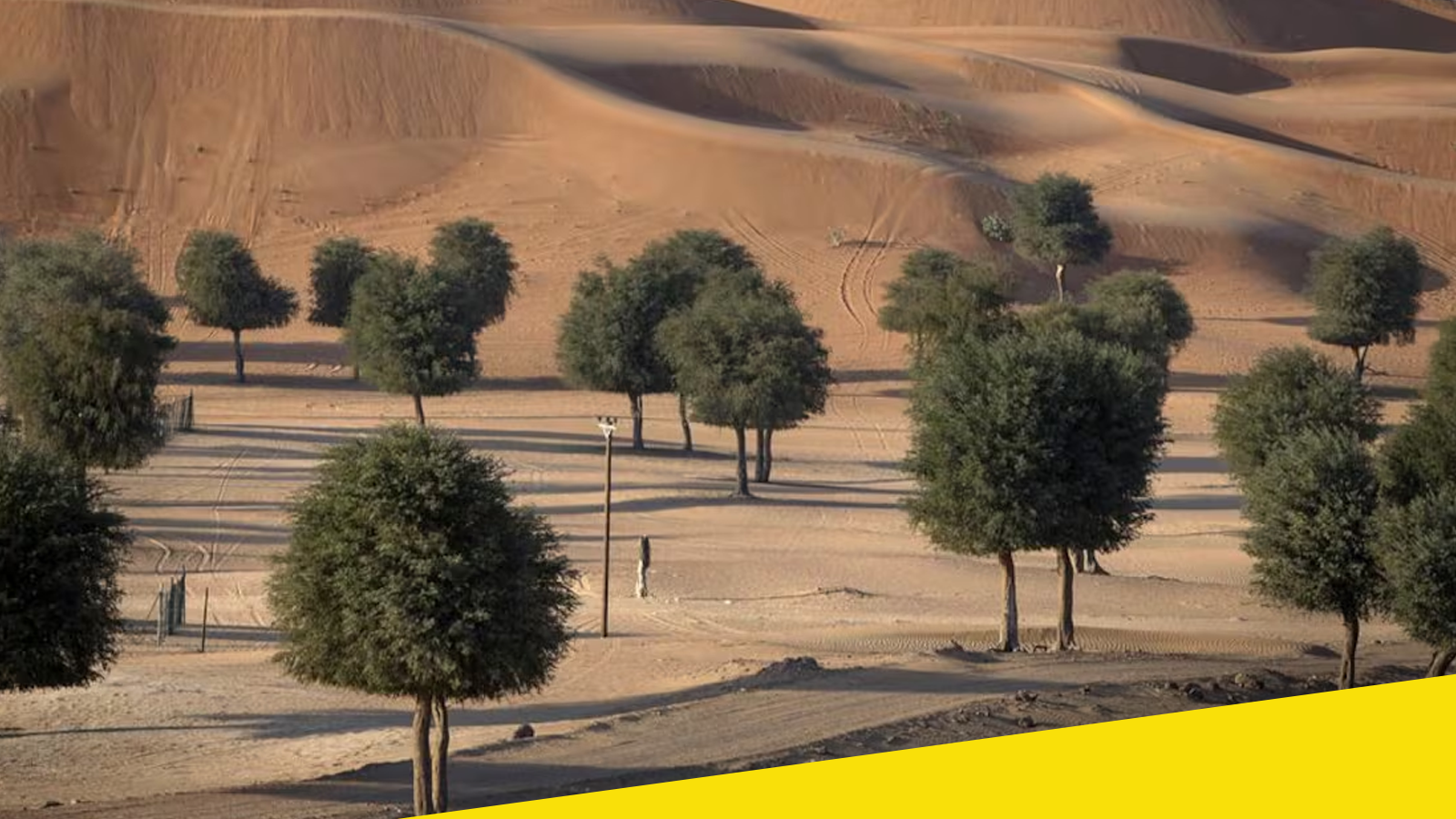
Across the sweeping dunes of the UAE’s desert, clusters of Ghaf trees rise as quiet symbols of resilience, endurance, and ecological importance. The Ghaf, long regarded as the national tree of the United Arab Emirates, has adapted remarkably to the harsh desert climate. In an environment defined by shifting sands and intense heat, these hardy evergreens offer shade, stability, and a surprising abundance of life.
The image captures this delicate balance: soft, golden dunes rolling across the horizon, while pockets of deep-green foliage interrupt the monotony of the desert floor. These trees tell a larger story—one of conservation, scientific curiosity, and national pride. In recent years, the UAE has intensified efforts to protect the Ghaf through reforestation programs, habitat restoration, and advanced genetic studies aimed at preserving its diversity for future generations. Such initiatives underscore the tree’s deep cultural roots, historically providing shelter, firewood, and gathering spaces for communities living in the region.
Beyond its heritage value, the Ghaf plays a crucial ecological role. Its deep root system helps combat desertification, stabilizes dunes, and enriches the soil, creating microhabitats that support birds, insects, and other native species. As climate pressures continue to reshape landscapes worldwide, the UAE’s commitment to preserving this iconic desert tree stands as an example of sustainable stewardship.
In the stillness of the desert, the Ghaf remains steadfast—an enduring reminder of the delicate relationship between nature and cultural identity in the Arabian Peninsula.