
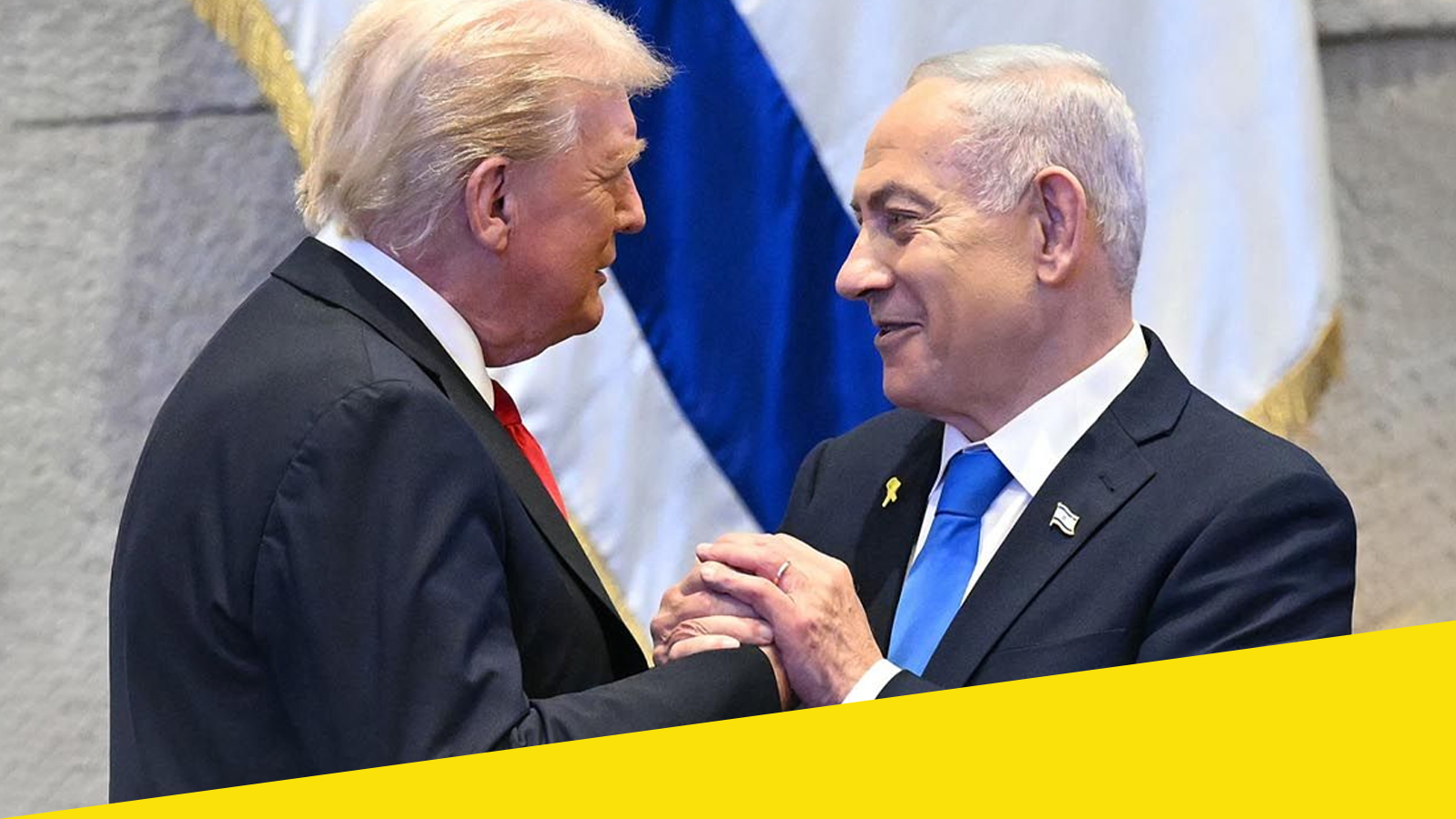
Israeli Prime Minister Benjamin Netanyahu has arrived in the United States for a closely watched round of talks with former US President Donald Trump, signaling a pivotal moment in the evolving political and strategic alignment between the two leaders. The meeting comes at a time of heightened tensions in the Middle East, with ongoing conflict in Gaza, regional security concerns, and intense diplomatic maneuvering on multiple fronts.
The image captures a warm yet deliberate exchange between Netanyahu and Trump, reflecting their long-standing political rapport. Their relationship, forged during Trump’s presidency, was marked by landmark decisions including the recognition of Jerusalem as Israel’s capital and the Abraham Accords, which reshaped diplomatic relations between Israel and several Arab states.
Sources familiar with the visit say discussions are expected to focus on regional security, Iran’s influence across the Middle East, and the future of US involvement in diplomatic efforts surrounding Gaza and broader Israeli-Palestinian dynamics. Netanyahu’s trip also comes amid domestic political pressure at home, where his leadership faces scrutiny over the handling of the war and internal divisions within Israel.
For Trump, the meeting reinforces his continued engagement with global leaders as he remains a dominant figure in American politics. Analysts note that the optics of the talks are significant, projecting continuity in US-Israel relations regardless of shifting political landscapes in Washington.
Observers believe the discussions could have far-reaching implications, particularly as regional actors closely monitor any signals of renewed policy alignment or strategic coordination. While no formal announcements have been made, the visit underscores the enduring importance of personal diplomacy in shaping geopolitical outcomes.
As Netanyahu’s US visit unfolds, the international community will be watching closely to see whether the talks yield concrete policy signals—or simply reaffirm a powerful political partnership at a critical juncture.