
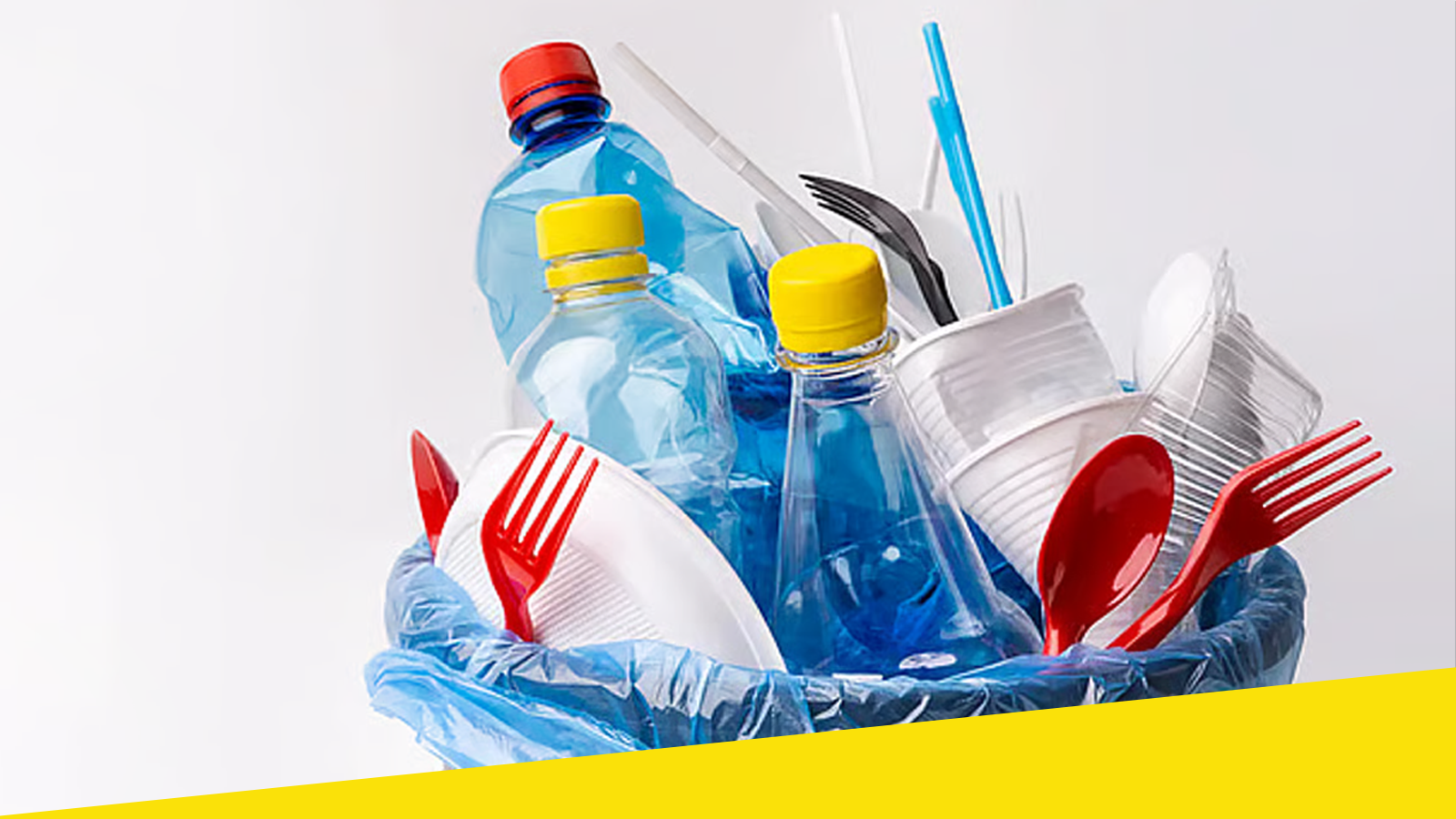
The image highlights a familiar sight in modern life: a bin overflowing with single-use plastic bottles, cups, straws, and cutlery. While these items offer convenience, they represent one of the most pressing environmental challenges of our time. Single-use plastics are designed for short-term use but persist in the environment for hundreds of years, creating long-lasting damage to ecosystems and human health.
Globally, millions of tonnes of plastic waste are generated each year, much of it ending up in landfills, rivers, and oceans. Marine life is especially vulnerable, as animals often mistake plastic for food or become entangled in it, leading to injury or death. Microplastics, formed as larger plastics break down, have now been detected in water, soil, food, and even the human body, raising serious concerns about long-term health impacts.
In response, governments and businesses are increasingly moving to restrict or ban single-use plastics. Many countries have introduced regulations targeting plastic bags, cutlery, and packaging, encouraging alternatives such as paper, glass, metal, and biodegradable materials. Businesses are being pushed to redesign packaging, invest in sustainable materials, and adopt circular economy models that prioritize reuse and recycling.
However, policy alone is not enough. Consumer behavior plays a critical role. Reducing plastic use, choosing reusable products, and properly sorting waste for recycling can significantly lower plastic pollution. Public awareness and education are essential to changing habits built around convenience.
The image serves as a reminder that everyday choices accumulate into a global problem. Addressing plastic waste requires coordinated action from governments, industries, and individuals to protect the environment for future generations.