
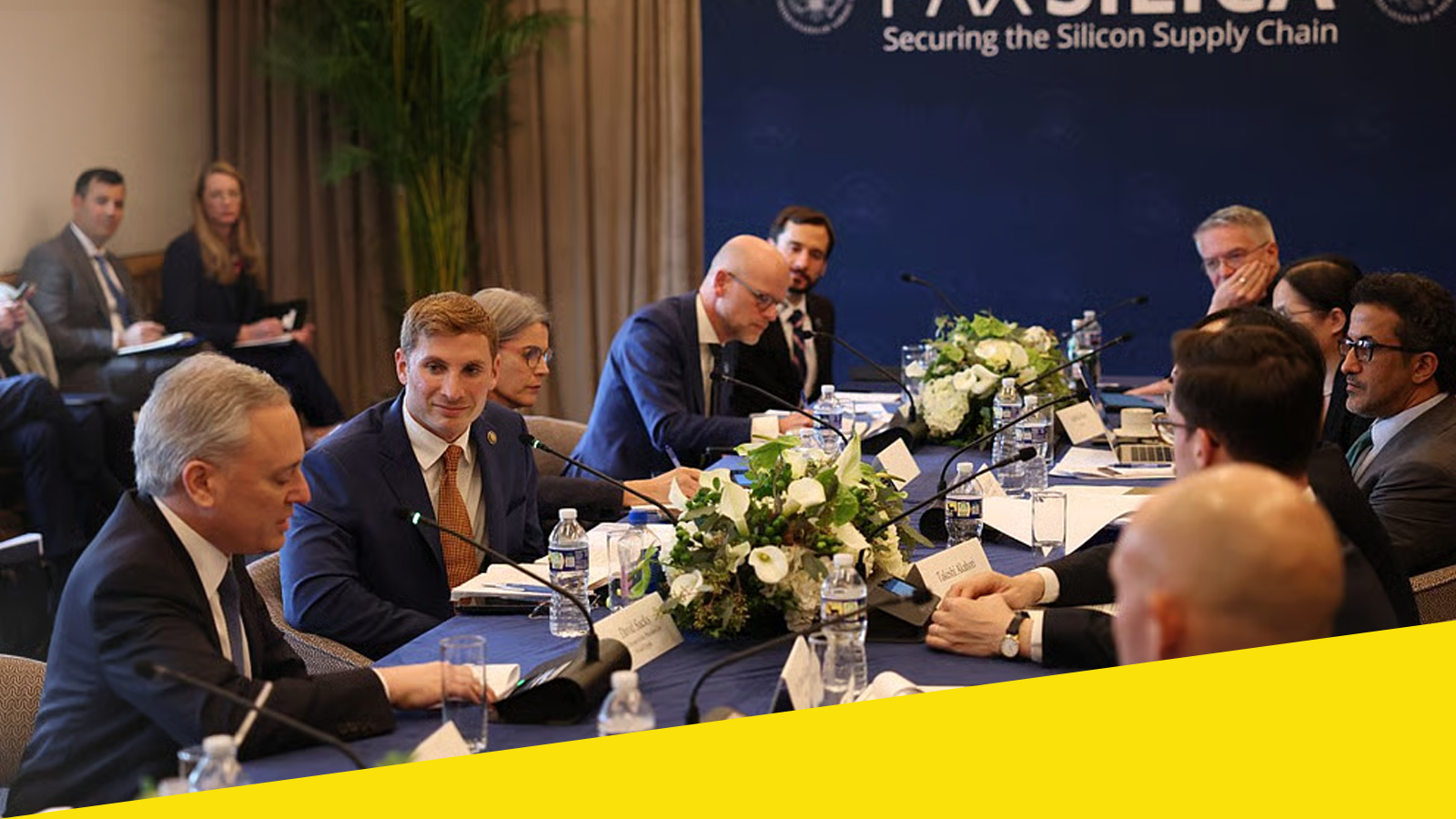
The United Arab Emirates is emerging as a central player in a new global technology bloc focused on securing the future of artificial intelligence and semiconductor supply chains. In the high-level meeting captured here, senior government officials, technology leaders, and policy experts convene to discuss strategic coordination around silicon supply, advanced computing, and AI governance—issues that are rapidly becoming matters of national security.
With global tensions reshaping trade routes and technology access, nations are increasingly seeking trusted partners to ensure uninterrupted access to critical components such as semiconductors. The UAE’s role in these discussions signals its transformation from a regional economic hub into a global technology power broker. Positioned between East and West, the country offers political stability, capital strength, and a clear ambition to lead in next-generation industries.
The meeting underscores a broader shift: AI and chip manufacturing are no longer purely commercial sectors but strategic assets. Securing silicon supply chains means safeguarding everything from defense systems and energy infrastructure to healthcare and financial markets. Participants appear focused on collaboration frameworks, regulatory alignment, and investment strategies designed to reduce dependency on fragile or hostile supply networks.
For the UAE, participation in such a bloc aligns with its long-term vision to diversify beyond oil, invest heavily in AI research, and attract top global talent. As the world moves toward a more fragmented technological order, alliances like this may define who leads—and who follows—in the AI-driven global economy.
What is clear from this gathering is that the race for technological sovereignty is accelerating, and the UAE intends to be firmly at the center of it.