
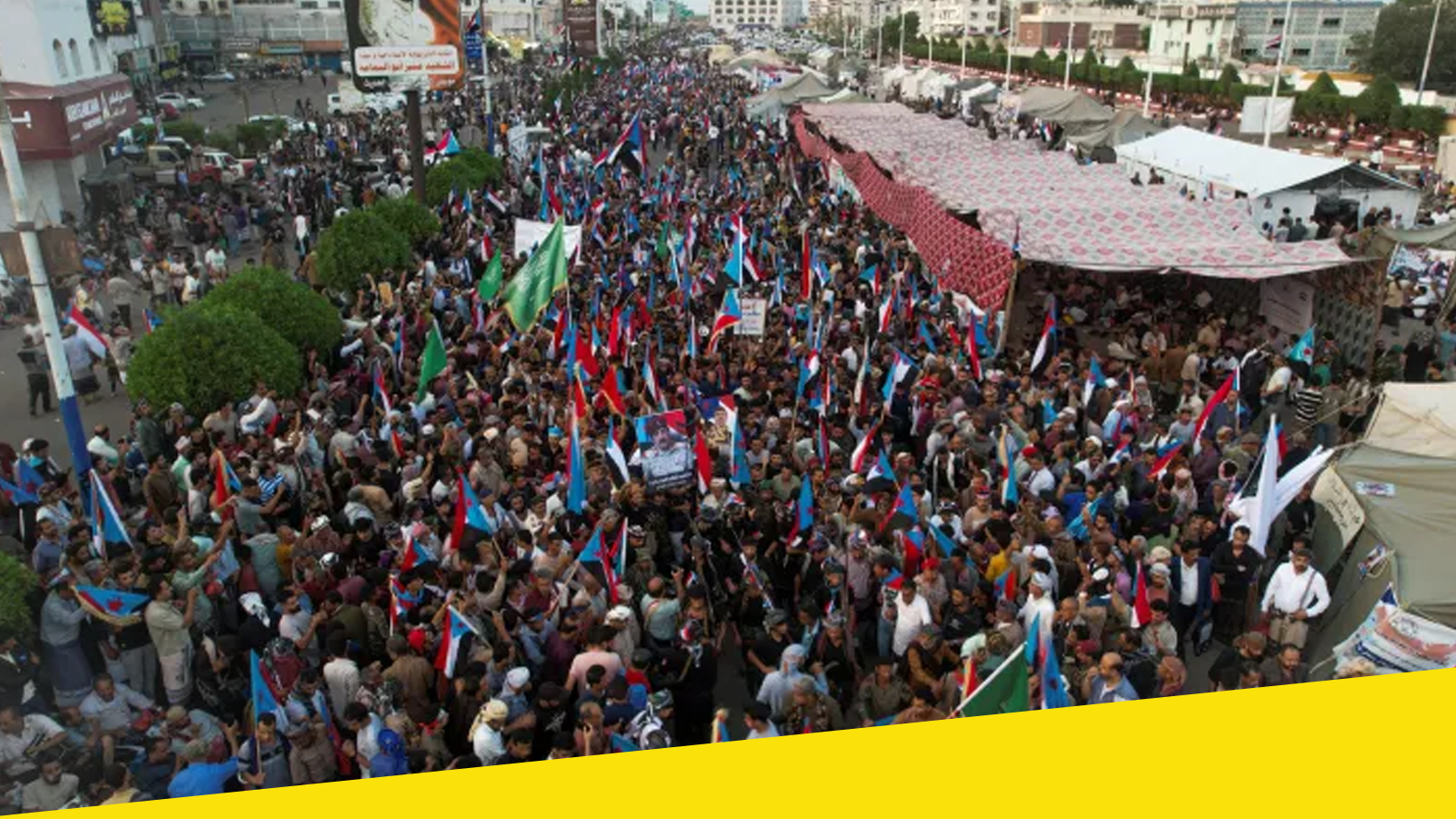
Thousands of demonstrators flooded the streets of a major southern Yemeni city, waving flags and banners in a powerful display of political mobilization. The densely packed crowd, stretching far beyond the visible horizon, reflects growing public anger and deepening divisions over Yemen’s future governance and regional influence. Organized rallies like this have become increasingly frequent as rival political factions compete for legitimacy amid prolonged instability.
The protest appears to be linked to southern political movements that seek greater autonomy or independence, capitalizing on public frustration with economic hardship, insecurity, and stalled peace efforts. Participants carried flags associated with southern identity and resistance, underscoring long-standing grievances dating back decades but intensified by the civil war that erupted in 2015. The presence of tents and makeshift structures suggests the demonstration was carefully planned, possibly intended as a sustained show of strength rather than a one-day event.
Regional dynamics play a crucial role in shaping these protests. Yemen has become a focal point of competing interests among regional powers, with internal factions often aligned with different external backers. These rivalries have complicated peace negotiations and contributed to fragmentation on the ground, particularly in the south where local forces wield significant control.
For ordinary citizens, the protest represents both hope and uncertainty. While many see mass mobilization as a way to demand political rights and improved living conditions, others fear that escalating tensions could trigger renewed violence. As Yemen’s conflict enters its second decade, scenes like this highlight the urgent need for inclusive dialogue, economic recovery, and a political settlement that addresses the aspirations of all regions and communities.