
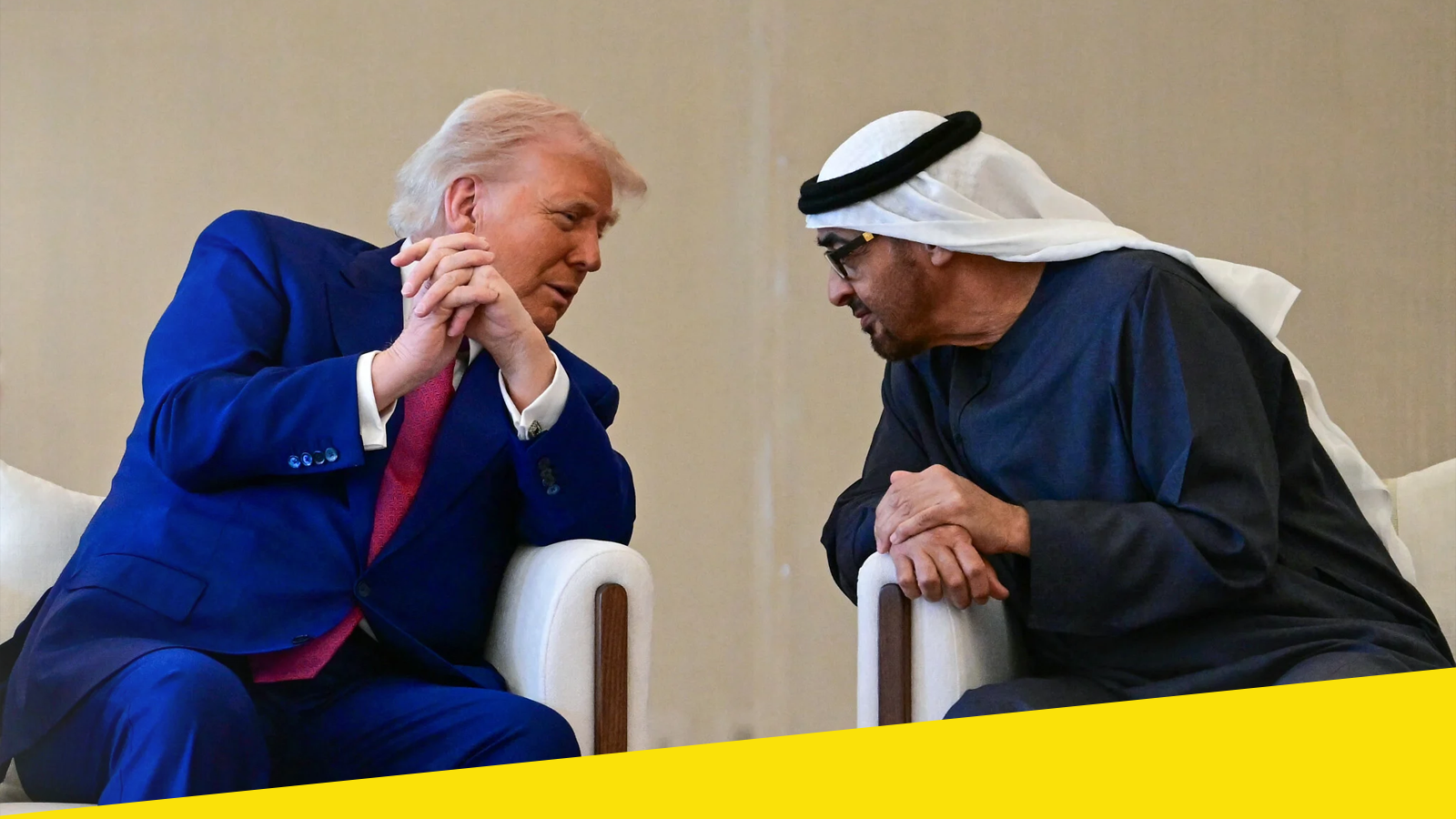
The United Arab Emirates’ public endorsement of former U.S. President Donald Trump’s proposed “Board of Peace” has triggered renewed international debate over diplomacy, power politics, and the evolving role of Gulf states in global affairs. The initiative, presented as a platform to mediate major international conflicts, is framed by its supporters as an unconventional attempt to bypass traditional multilateral institutions and accelerate conflict resolution through elite-level dialogue.
The image of Trump in close conversation with a senior Emirati leader symbolizes the growing political rapport between Washington’s conservative leadership circles and key Gulf allies. For the UAE, backing such a proposal aligns with its broader strategy of positioning itself as a diplomatic broker and security partner, leveraging its economic influence and regional networks to gain global relevance beyond the Middle East.
Critics, however, argue that the “Board of Peace” lacks transparency, legal legitimacy, and inclusivity. They warn that sidelining established institutions such as the United Nations risks undermining international norms and could concentrate decision-making power in the hands of a few politically aligned actors. Some European and Global South observers have also expressed concern that the initiative may reflect geopolitical interests rather than neutral peacemaking.
Within the region, reactions are mixed. Supporters see the endorsement as evidence of the UAE’s confidence and willingness to engage with bold, nontraditional ideas. Skeptics question whether associating closely with a polarizing political figure could complicate relations with other global partners, especially if leadership dynamics in Washington shift again.
Ultimately, the controversy surrounding the “Board of Peace” highlights the changing nature of diplomacy in an era marked by fragmentation and competition. As traditional frameworks struggle to deliver results, alternative models are emerging—but their credibility, effectiveness, and long-term impact remain deeply contested on the global stage.