
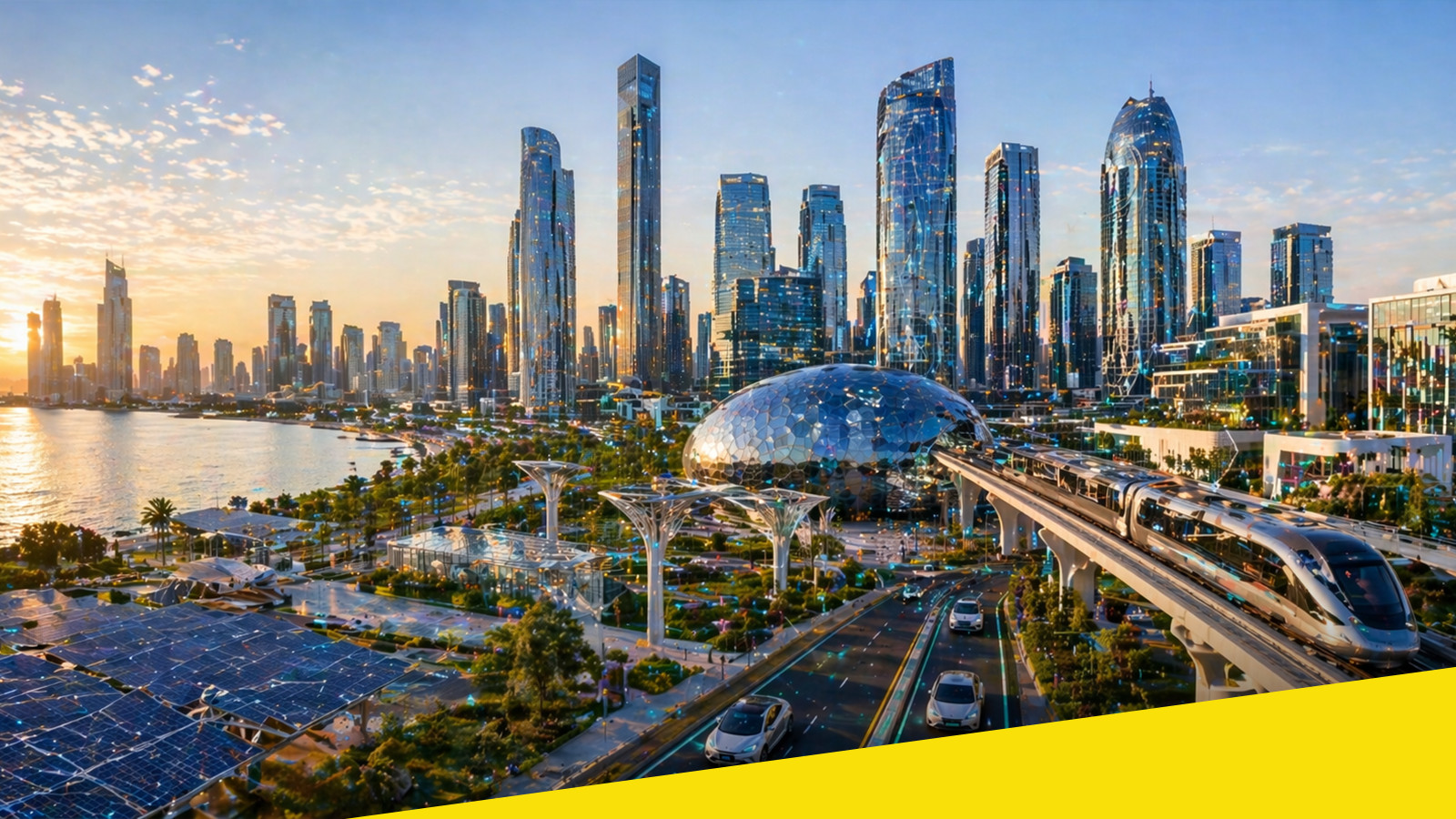
Abu Dhabi is rapidly advancing its ambition to become one of the world’s most technologically integrated urban centers, unveiling a new wave of smart city infrastructure projects. The initiative blends cutting-edge architecture, sustainable energy systems, and intelligent transport networks to reshape how residents live, work, and move.
At the heart of the transformation is a seamless mobility ecosystem. High-speed metro lines, autonomous vehicles, and AI-powered traffic management systems are being integrated to reduce congestion and emissions. Elevated transit corridors and smart roads are designed to communicate with vehicles in real time, enhancing both efficiency and safety.
Sustainability remains a central pillar. Large-scale solar installations, green rooftops, and energy-efficient buildings are being deployed across the city. Urban planners are prioritizing walkable communities, smart irrigation systems, and eco-friendly public spaces that balance modern living with environmental responsibility.
The city’s skyline reflects this futuristic direction, with digitally connected skyscrapers and multipurpose hubs equipped with IoT technologies. These systems monitor energy use, optimize resources, and improve overall urban management. Public services from healthcare to security are also being enhanced through data-driven solutions and predictive analytics.
Officials say the goal is not just innovation, but resilience. By combining sustainability with advanced technology, Abu Dhabi aims to future-proof its infrastructure against climate challenges while boosting economic growth.
As global cities race toward digital transformation, Abu Dhabi’s bold investments position it as a leading model for smart urban development in the Middle East and beyond.