
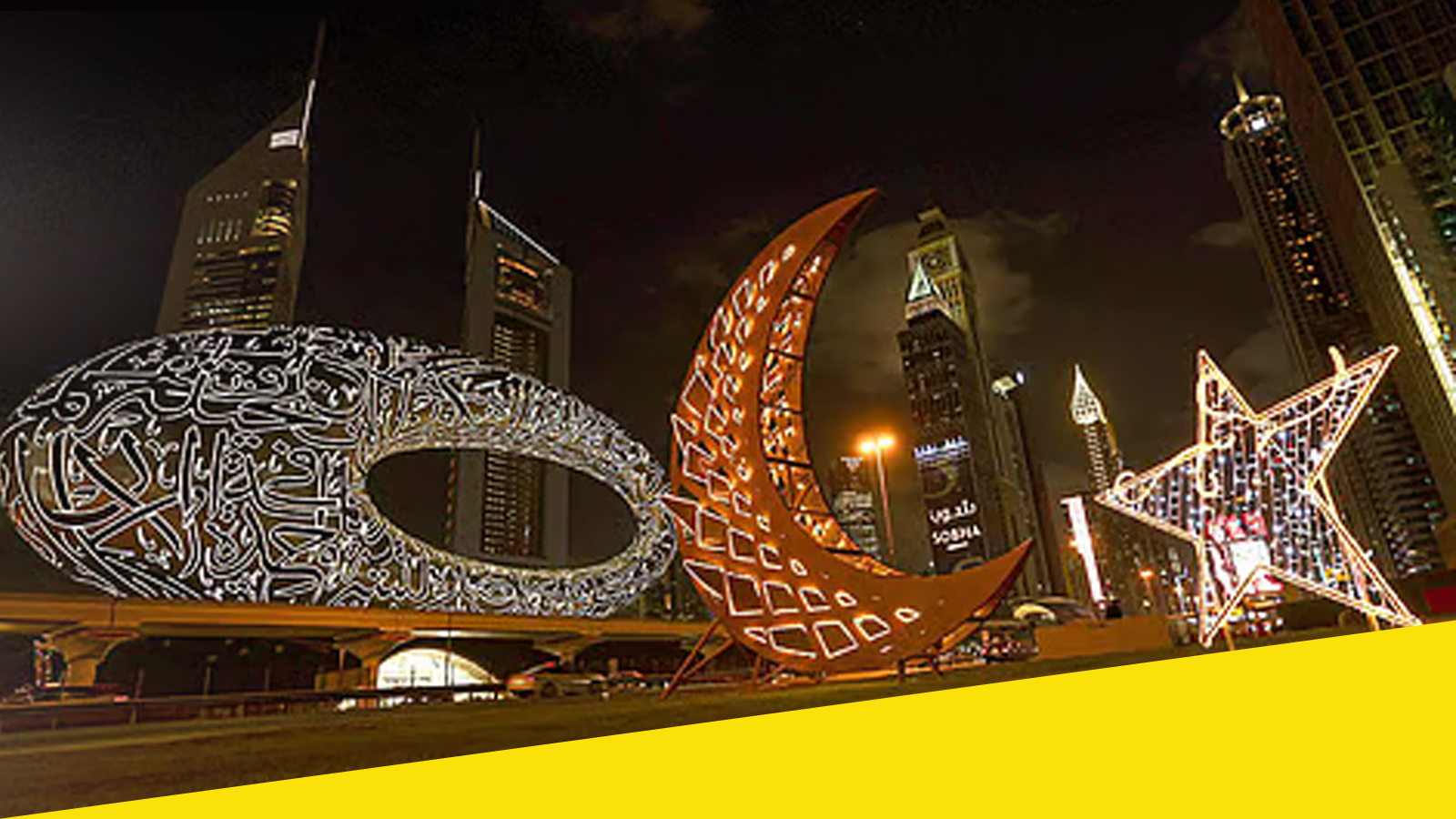
Dubai’s skyline glows with symbolism and celebration as Ramadan decorations illuminate the city’s modern landmarks. In this nighttime scene, futuristic architecture and traditional Islamic motifs come together, reflecting how the UAE blends innovation with heritage during the holy month. The brightly lit crescent and star installations stand prominently in the foreground, representing key symbols associated with Ramadan and Islamic culture, while the surrounding skyscrapers highlight Dubai’s global, forward-looking identity.
One of the most striking features visible is the torus-shaped Museum of the Future, covered in flowing Arabic calligraphy and glowing with soft white light. Its presence beside festive Ramadan displays creates a powerful visual contrast between cutting-edge design and spiritual tradition. Streets and public spaces across the city are often decorated in a similar way during Ramadan, with lanterns, light sculptures, and themed installations encouraging a sense of unity and reflection.
During this period, cities across the UAE typically extend hospitality initiatives, night markets, and community events after sunset. The illuminated decorations are not just aesthetic they help create a warm, welcoming environment for families and visitors gathering for iftar and evening prayers. Public areas become social hubs where culture, faith, and celebration intersect.
Such displays also support tourism and local business, as visitors are drawn to photograph and experience the festive atmosphere. The combination of architectural icons and religious symbols tells a broader story: Ramadan in the UAE is both deeply spiritual and vibrantly public, marked by generosity, design, and shared experience under glowing city lights.