
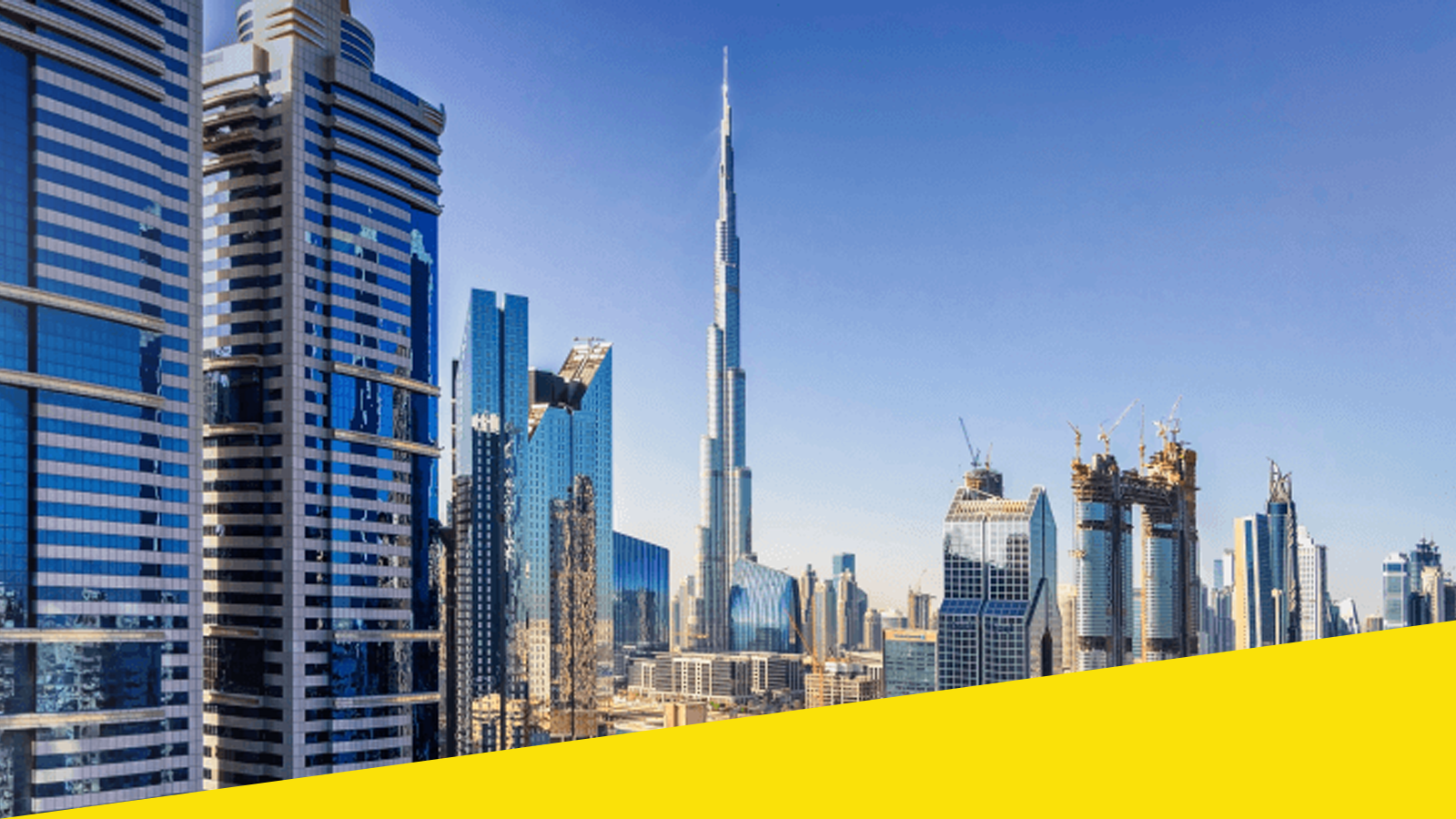
Dubai’s skyline stands as one of the most striking urban landscapes in the world, reflecting the emirate’s rapid transformation from a desert trading hub into a global city. Dominating the scene is the Burj Khalifa, the tallest building on Earth, rising sharply above a dense cluster of glass-and-steel towers. More than an architectural marvel, the Burj Khalifa symbolizes Dubai’s relentless ambition and willingness to push beyond conventional limits.
Surrounding it are modern skyscrapers that house financial institutions, multinational corporations, luxury residences, and hotels, highlighting Dubai’s role as a major center for commerce, tourism, and innovation. The clean lines, reflective façades, and ongoing construction visible across the skyline underline a city that is constantly evolving rather than resting on past achievements.
Dubai’s urban development mirrors its broader economic strategy: diversification, global connectivity, and future readiness. From real estate and finance to technology and sustainability, the city positions itself as a bridge between East and West. The skyline is not just designed to impress visually, but to communicate confidence to investors, businesses, and visitors from around the world.
Equally important is how Dubai balances ambition with planning. Infrastructure, transport networks, and mixed-use developments are carefully integrated to support rapid growth. The skyline, therefore, represents more than tall buildings—it reflects a carefully constructed vision of progress.
In essence, Dubai’s skyline is a visual narrative of modern aspiration. It tells a story of speed, scale, and strategic thinking, capturing how a city can redefine itself within a single generation while projecting its influence far beyond its borders.