
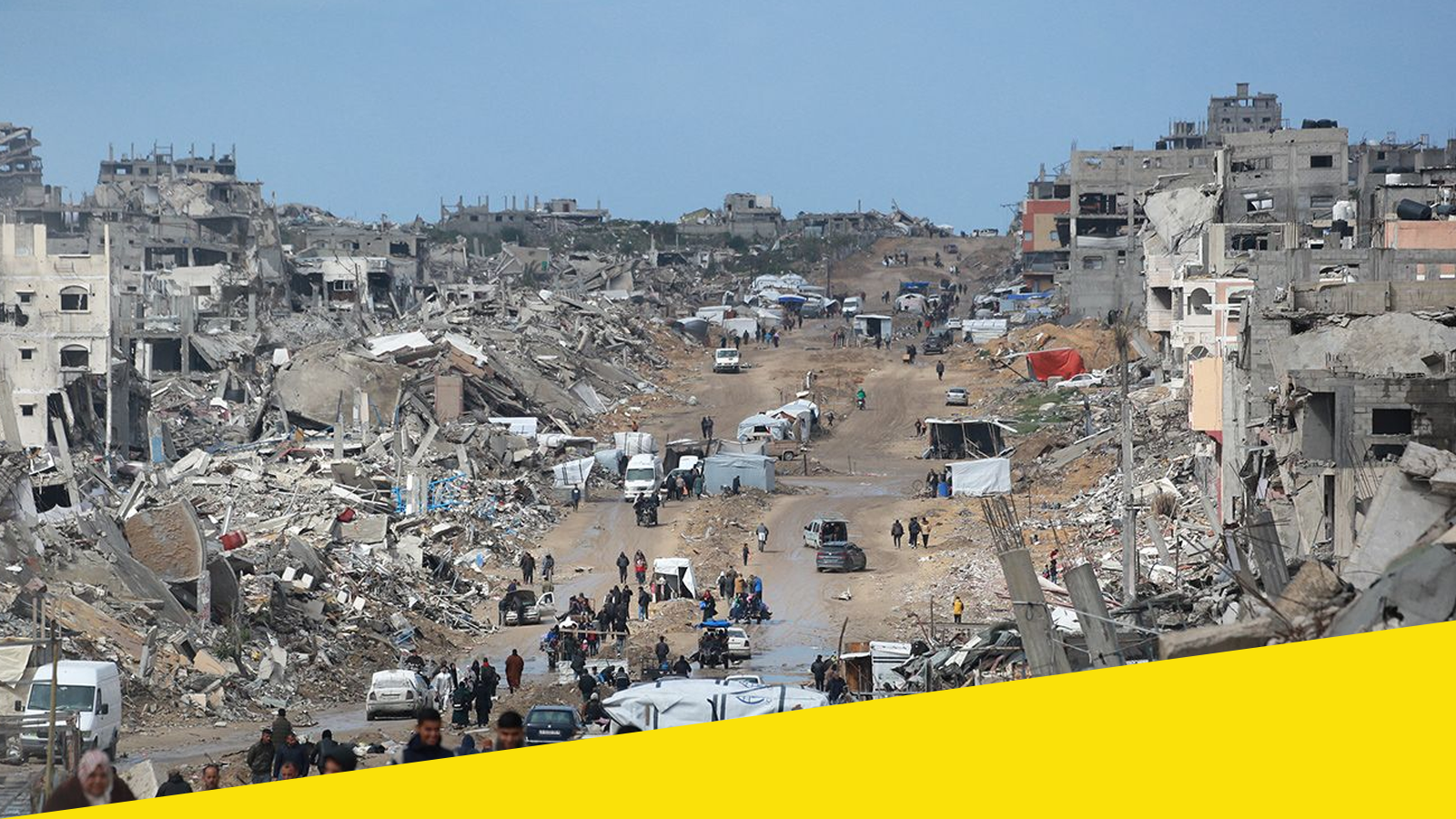
Gaza, where entire neighborhoods lie in ruins and daily life continues amid widespread destruction. Collapsed buildings line both sides of a damaged road, while civilians, aid workers, and vehicles move cautiously through debris-strewn streets. This scene reflects the prolonged impact of the Gaza war, which continues to place immense humanitarian, political, and security pressure on the wider Middle East.
Months of intense fighting have severely damaged Gaza’s infrastructure, including homes, hospitals, roads, and utilities. The destruction visible in the image highlights the scale of displacement, with thousands of families forced to seek temporary shelter in makeshift camps or overcrowded areas. Limited access to clean water, electricity, and medical care has deepened the humanitarian crisis, drawing urgent concern from international organizations.
Beyond Gaza, the conflict has heightened regional tensions. Neighboring countries face diplomatic strain, refugee concerns, and security risks as violence threatens to spill across borders. Major regional and global powers remain closely involved, balancing calls for ceasefires with strategic and political interests. This has complicated efforts to de-escalate the conflict and deliver sustained humanitarian relief.
The image also captures the resilience of civilians navigating destruction in their daily routines. Despite the rubble, people continue moving, trading, and supporting one another, underscoring the human cost of prolonged warfare. For many, survival depends on aid convoys and international assistance operating under difficult conditions.
As the war persists, Gaza remains at the center of regional instability. Without a lasting political solution, the destruction shown here risks becoming a permanent reality, reinforcing cycles of violence and keeping pressure high across an already fragile Middle Eastern landscape.