
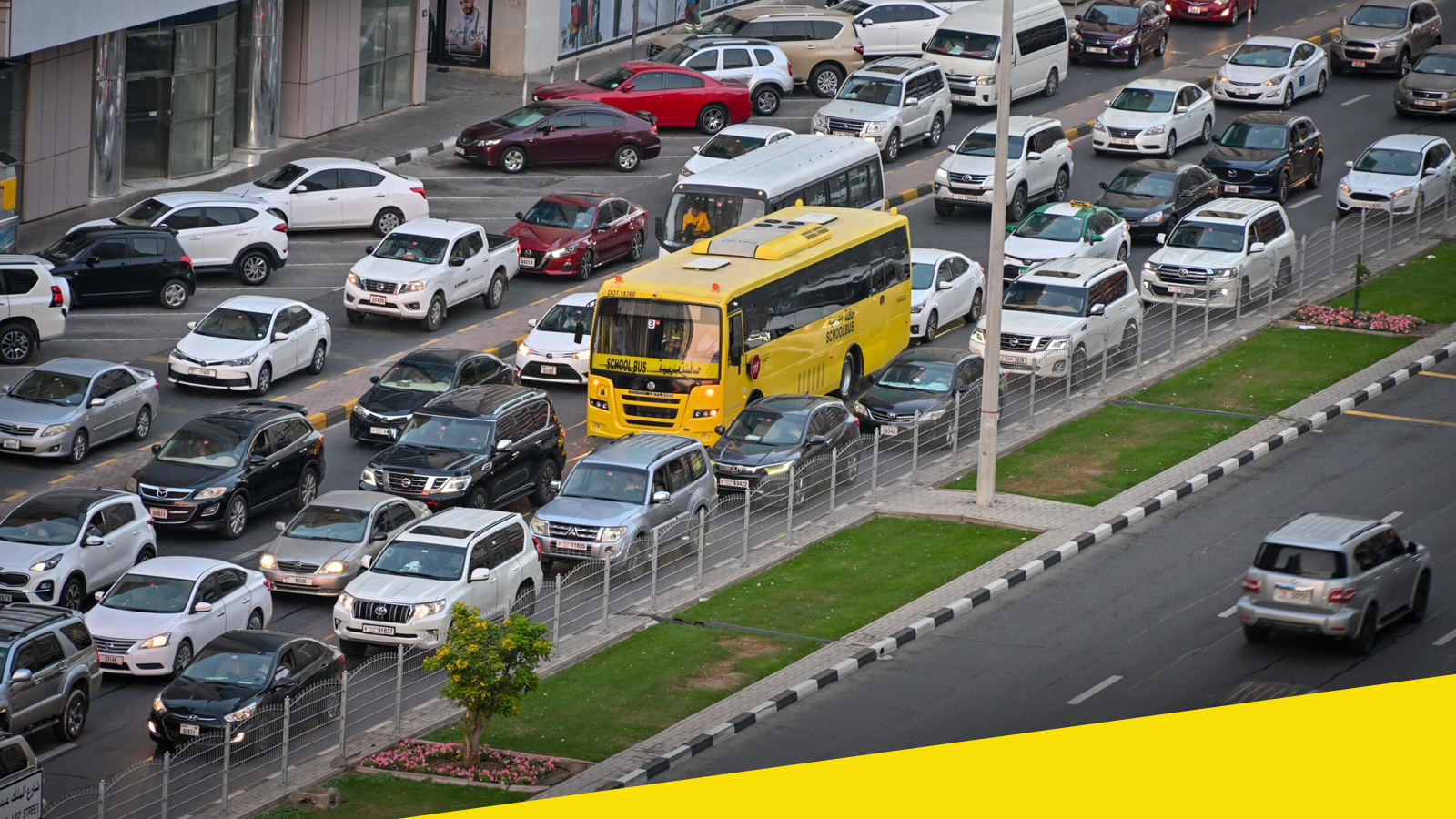
Heavy traffic congestion brought large parts of the Dubai–Sharjah corridor to a near standstill today, frustrating thousands of commuters during peak hours. Major arterial roads experienced bumper-to-bumper traffic, with vehicles crawling forward as motorists faced extended delays on their daily commute.
The congestion was particularly intense on routes connecting residential areas in Sharjah to commercial districts in Dubai, a stretch known for heavy movement during morning and evening rush hours. Buses, private cars, and school transport were all caught in the gridlock, highlighting the growing pressure on urban road networks as population and vehicle numbers continue to rise.
Authorities attributed the slowdown to a combination of high traffic volume, lane bottlenecks, and ongoing road maintenance in select areas. Minor accidents and frequent merging further compounded delays, causing ripple effects across connecting roads and service lanes. Traffic police were deployed to manage flow and ease congestion at critical junctions.
Urban planners have long identified the Dubai–Sharjah commute as one of the most challenging in the UAE, with thousands of residents traveling daily between the two emirates for work and education. Despite improvements such as road expansions and smarter signal systems, demand continues to outpace infrastructure capacity during peak periods.
Commuters were advised to plan journeys in advance, use public transport where possible, and consider flexible working hours to avoid peak congestion. Authorities also encouraged the use of real-time navigation apps to identify alternative routes and updates.
As cities continue to expand, transport experts stress the importance of sustainable mobility solutions, including enhanced public transport, remote work policies, and staggered office timings, to reduce pressure on roads and improve overall commuting efficiency in the long term.