
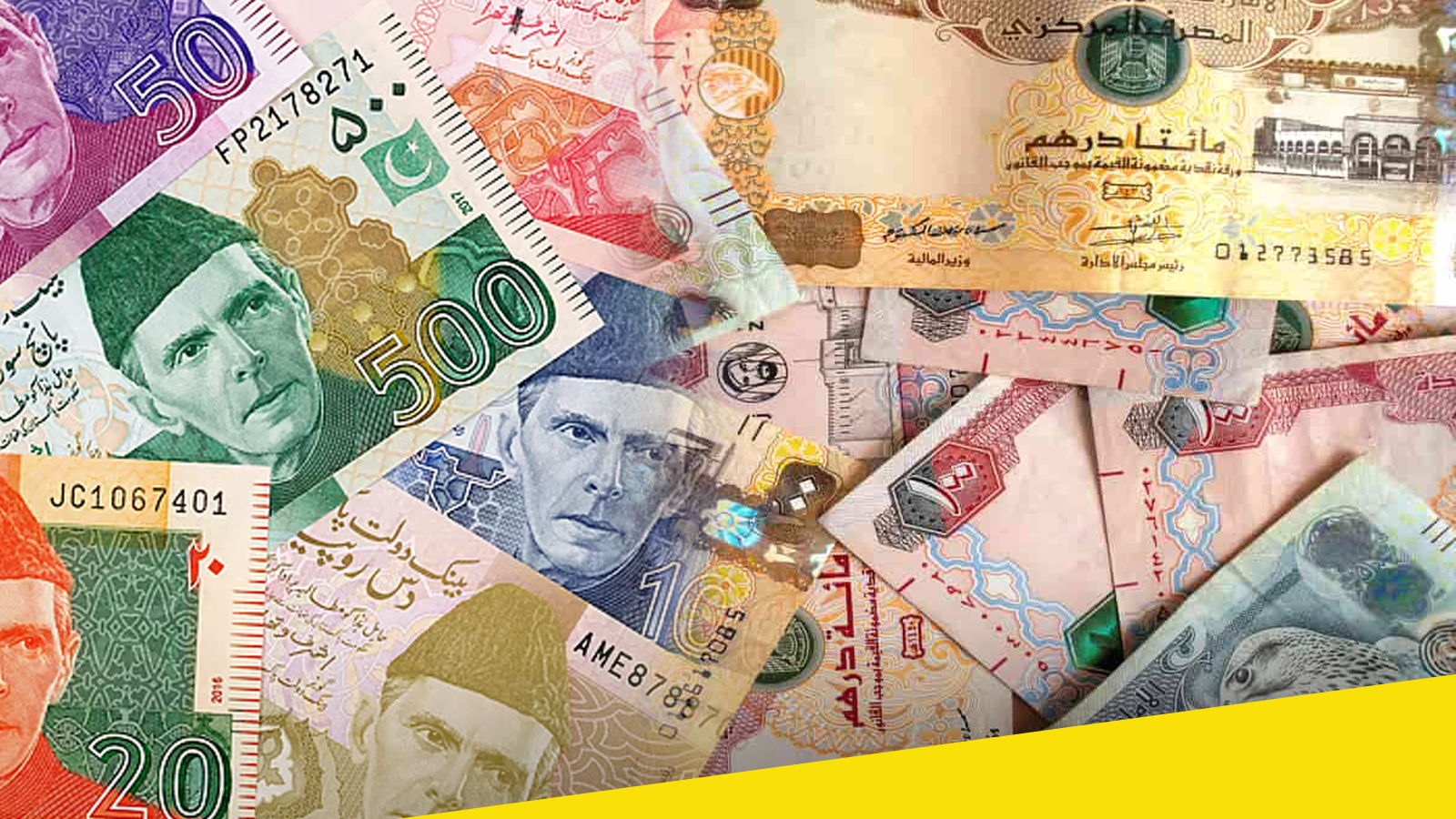
The UAE dirham has continued to strengthen against the Pakistani rupee, deepening financial pressure on Pakistani households, importers, and expatriates sending money home. As the rupee remains under strain from inflation, foreign debt obligations, and weak investor confidence, the currency gap between the two countries has widened noticeably.
Because the dirham is pegged to the US dollar, it benefits directly from dollar strength in global markets. In contrast, Pakistan’s rupee has faced repeated devaluations driven by shrinking foreign reserves, rising fuel import bills, and ongoing negotiations with international lenders. This divergence has made remittances from the UAE more valuable in rupee terms, offering some relief to families in Pakistan who rely heavily on money sent from abroad.
However, the stronger dirham also comes with downsides. Pakistani businesses importing goods from the UAE now face higher costs, which often get passed on to consumers through increased prices. Everyday essentials, electronics, and industrial supplies sourced from Gulf markets have become more expensive, adding to domestic inflationary pressures.
For Pakistani expatriates working in the UAE, the currency shift is a double-edged sword. While remittances yield more rupees back home, savings and travel expenses denominated in dirhams remain high. Any further weakening of the rupee could intensify these challenges.
Economists warn that unless Pakistan stabilizes its macroeconomic fundamentals boosting exports, controlling inflation, and restoring market confidence the rupee is likely to remain vulnerable. Meanwhile, the dirham’s stability continues to underscore the economic resilience of the UAE in a volatile global financial environment.